
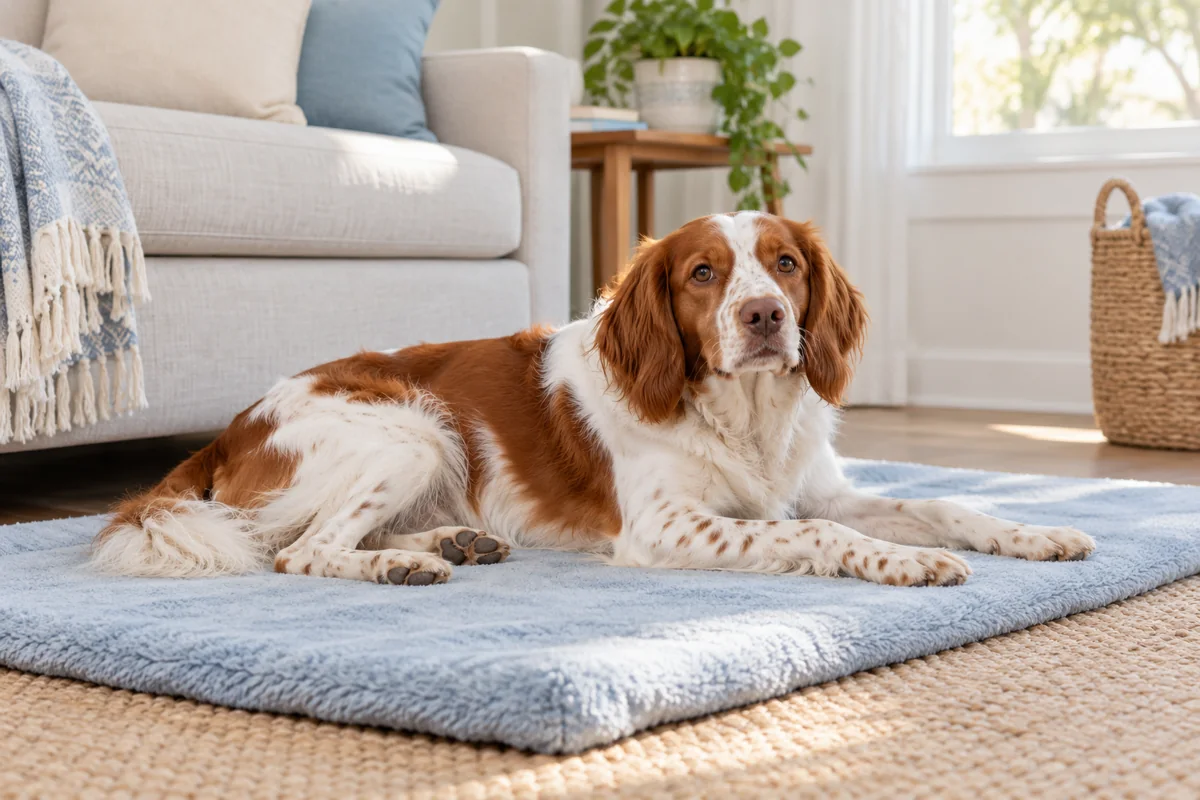
Your first small step
Reward relaxed moments on a comfortable mat before expecting calm around visitors or a busy café.
Choose a comfortable starting point
Put a non-slip mat or blanket in a quiet space. Make sure your dog has had a chance to toilet and has access to water. Start when their basic needs are met, not at the peak of excitement.
Notice and reward relaxation
- Sit nearby and let your dog explore the mat voluntarily.
- Quietly reward small relaxed moments, such as resting on the mat.
- Deliver small treats calmly so your movements do not turn the session into an exciting game.
- Build the time between rewards gradually. Keep the setup easy and let your dog leave.
Once your dog is comfortable, practice in another quiet location before adding bigger distractions.
Prefer an organized curriculum alongside your practice? Explore Brain Training for Dogs (affiliate link). It is optional; continue below for the rest of this free guide.
Plan the next session
Pick one ordinary moment in your day: a page of a book, a short cup of tea, or a few minutes at your desk. Write down where the mat will go and what you will do. A concrete plan is easier to repeat than “work on calmness.”
Your observation might be: “The hallway was too busy; tomorrow I will try the corner of the living room.” That is useful progress in your plan even if your dog did not settle today.
When to pause
Do not restrain your dog on the mat or punish them for getting up. If they cannot get comfortable, seem distressed, or show a sudden change in rest habits, seek individual advice. A mat exercise is not treatment for pain or separation anxiety.
Sources & further reading
Dogs Trust: settle training. The practical planning examples are our editorial suggestions. The source organization has not reviewed this article or endorsed our course recommendation.
General education only. For pain, sudden behavior changes, fear, aggression, or distress, consult your veterinarian and a qualified reward-based behavior professional.