
Your first small step
Reward a slack leash and a comfortable position near you. Increase difficulty gradually; never jerk the leash.
Practice where success is possible
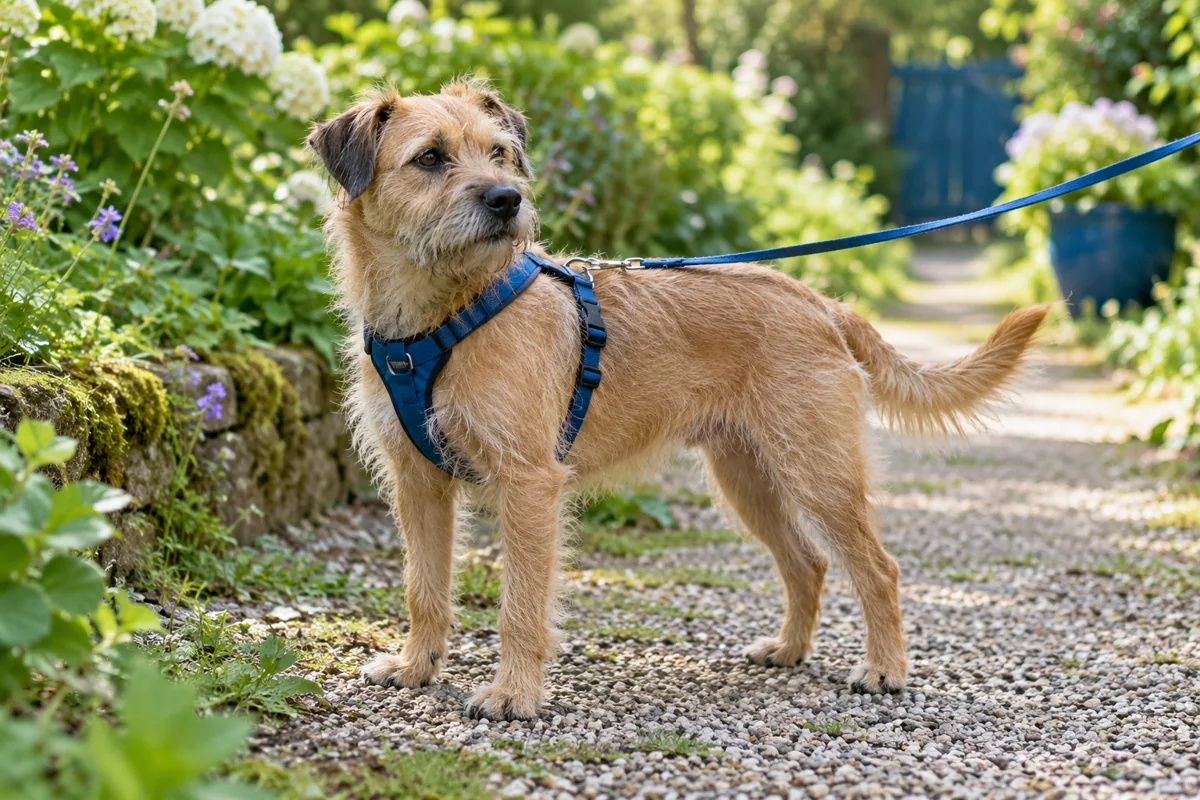
Use comfortable, properly fitted equipment and a safe practice area. Have small rewards ready. Begin with your dog near your side and reward that position before you start moving.
Build a few steps at a time
- Take a small number of steps and reward your dog while the leash is loose.
- If the leash tightens, stop calmly instead of pulling your dog back.
- Resume when they return to a position that allows slack.
- Add more steps gradually and allow sniffing breaks.
The aim is a comfortable walk, not a dog glued to your leg throughout every outing.
Prefer an organized curriculum alongside your practice? Explore Brain Training for Dogs (affiliate link). It is optional; continue below for the rest of this free guide.
Separate practice from the whole walk
Give your next outing one modest practice goal. For example: “At the quiet end of the driveway, I will reward two comfortable steps.” Avoid turning every minute outside into a test.
Write down where practice became difficult. Was it the corner, a passing dog, or a stretch full of smells? Use that note to choose a quieter starting point next time. Change the plan rather than labeling your dog stubborn.
Know when this guide is not enough
Do not use leash corrections, choking, or intimidation. Barking, lunging, fear, or difficulty physically handling your dog calls for tailored professional support. This beginner walking exercise is not a reactivity treatment plan.
Sources & further reading
Dogs Trust: walking nicely on lead. The practical planning examples are our editorial suggestions. The source organization has not reviewed this article or endorsed our course recommendation.
General education only. For pain, sudden behavior changes, fear, aggression, or distress, consult your veterinarian and a qualified reward-based behavior professional.