
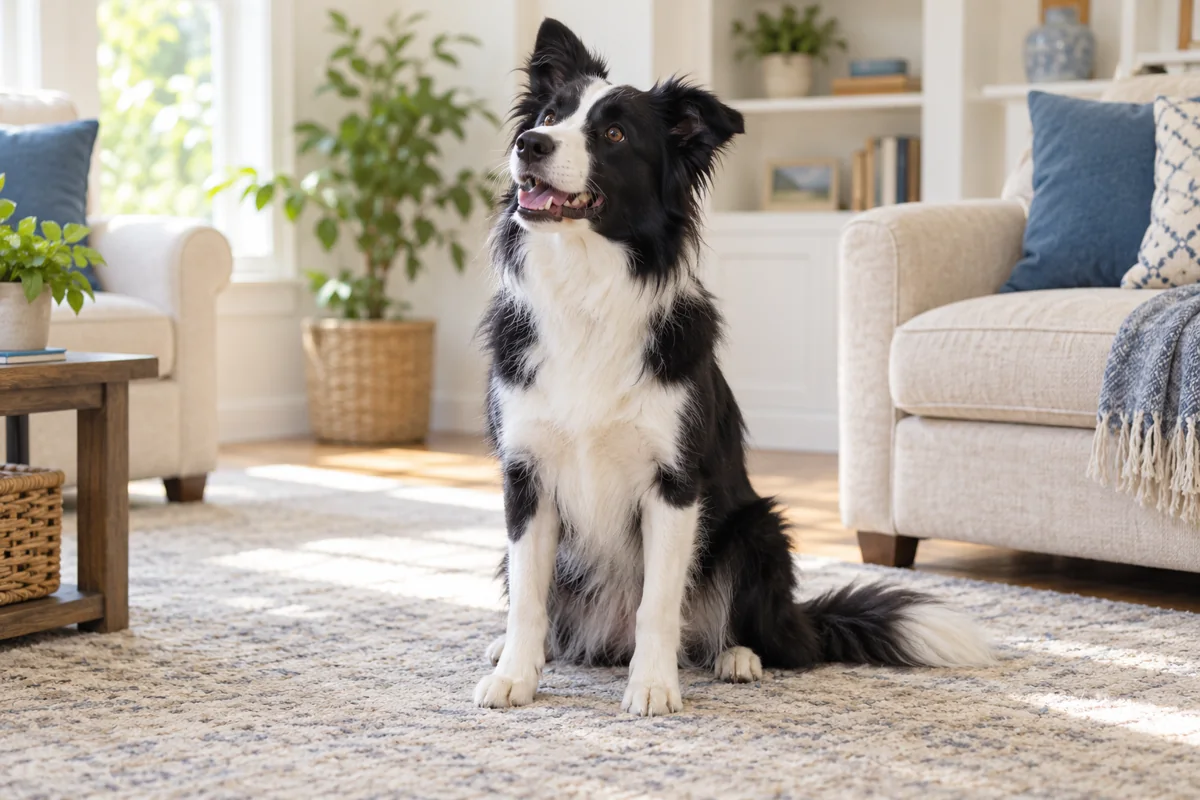
Your first small step
Start in a quiet room, reward a glance toward you, and stop while the exercise still feels easy.
Set up an easy first attempt
Choose a familiar, low-distraction space and small, dog-safe rewards your dog enjoys. Work with one dog at a time. You are practicing attention, not testing obedience in the hardest situation you can find.
Try a short name game
- Stand close to your dog and say their name once in a friendly voice.
- When they turn toward you, immediately mark the moment with a familiar reward word and give a treat.
- Let them look away before trying again. Keep the session brief.
- If there is no response, make the setting easier rather than repeating the name over and over.
A quick glance counts. Do not demand prolonged eye contact or hold your dog in place.
Prefer an organized curriculum alongside your practice? Explore Brain Training for Dogs (affiliate link). It is optional; continue below for the rest of this free guide.
Make a useful note
After practice, write one sentence: “In the kitchen, with no other pets nearby, my dog turned when I said their name.” That tells you much more than “good session.” Next time, repeat that setup before changing anything.
Try this simple log: place / distraction / response / next small adjustment. You do not need an app or a perfect score. You need a repeatable starting point.
Use the skill thoughtfully
A name cue asks for attention; it is not a recall cue or a promise that your dog is safe off leash. Build distractions gradually. Avoid using their name to scold them. If hearing or behavior changes suddenly, talk to your veterinarian.
Sources & further reading
Dogs Trust: teaching your dog their name. The practical planning examples are our editorial suggestions. The source organization has not reviewed this article or endorsed our course recommendation.
General education only. For pain, sudden behavior changes, fear, aggression, or distress, consult your veterinarian and a qualified reward-based behavior professional.