
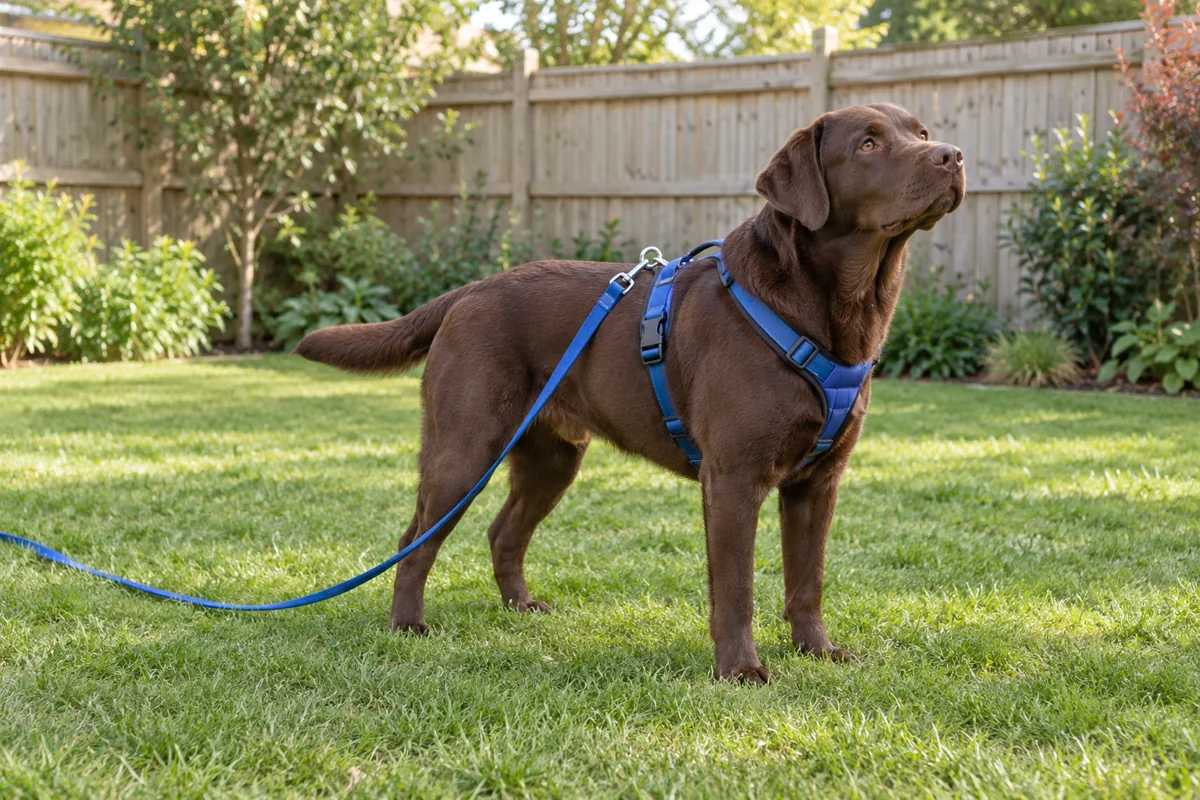
Your first small step
Start close, reward returning, and keep your dog safely contained or on suitable equipment while learning.
Begin close to home
Use a secure, quiet area. Choose a consistent recall cue and a reward your dog values. Start a short distance away, encourage your dog toward you, and reward the return.
Protect the positive association
- Practice short, easy distances before adding distractions.
- Reward your dog when they arrive, even if the return took longer than you hoped.
- Avoid calling them to punish them or consistently end something enjoyable.
- For outdoor practice, use a safe enclosed space or an appropriate long line on a well-fitted harness, handled safely away from roads.
Prefer an organized curriculum alongside your practice? Explore Brain Training for Dogs (affiliate link). It is optional; continue below for the rest of this free guide.
Plan a situation, not a deadline
Instead of promising yourself reliable recall by Friday, describe an easy setup you can repeat. “One person, a quiet enclosed space, a short distance, and a favorite reward” is a useful plan.
Keep a note of what made a return easy. If your dog was absorbed in something else, record that too. The next session can be easier; it does not have to be farther away.
Do not turn practice into a safety gamble
One successful session does not establish reliable recall everywhere. Follow local leash rules and keep physical safeguards around traffic, wildlife, and unfamiliar dogs. Never chase or punish a dog for returning. Seek individual help if recall practice is becoming unsafe.
Sources & further reading
RSPCA: coming when called. The practical planning examples are our editorial suggestions. The source organization has not reviewed this article or endorsed our course recommendation.
General education only. For pain, sudden behavior changes, fear, aggression, or distress, consult your veterinarian and a qualified reward-based behavior professional.