
Your first small step
Prepare a calm helper, reward paws on the floor, and use safe separation when the situation is too exciting.
Make the greeting manageable
Ask your helper to approach quietly. A suitable barrier can give everyone space before a greeting. Do not let your dog rehearse jumping on children or people who could be knocked over.
Reward the greeting you want
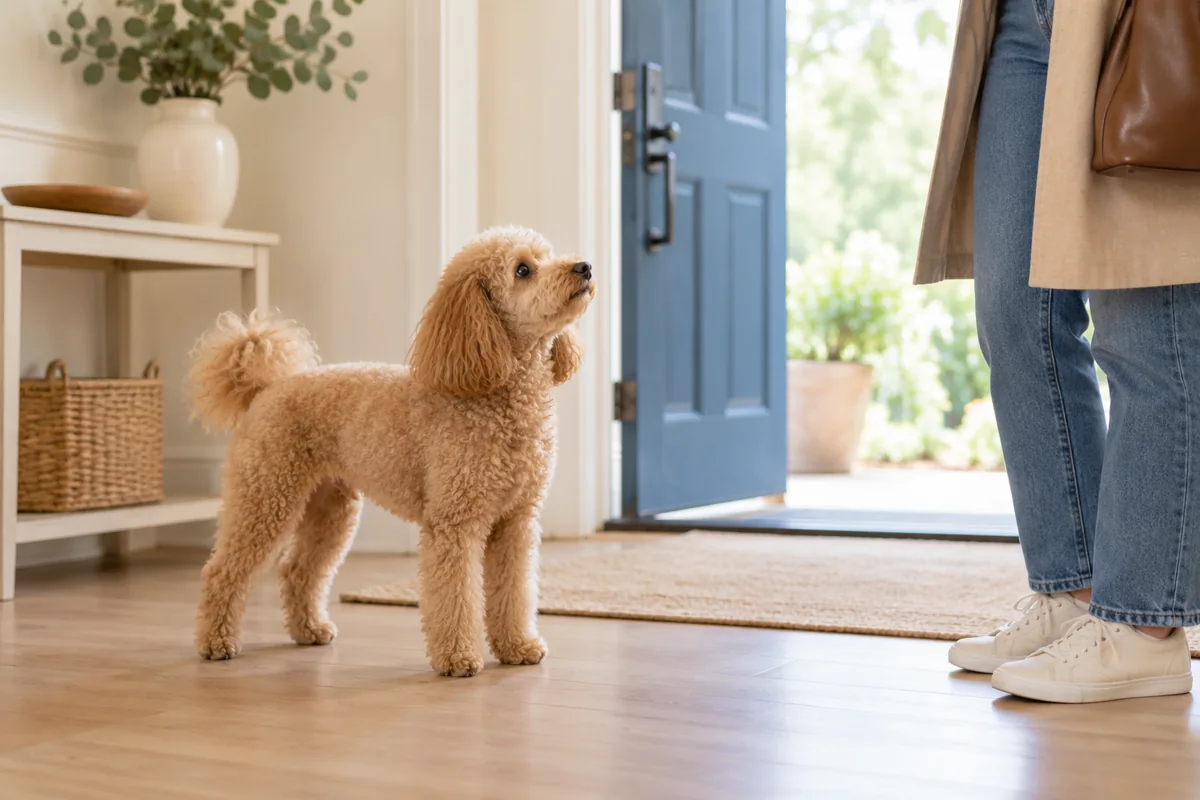
- Notice and reward your dog while all four paws are on the floor.
- Let calm attention become part of the reward if your dog enjoys it.
- If they jump, the helper should pause attention calmly. Try again with an easier, less exciting approach.
- Keep practice short and ask household members to use the same approach.
Avoid pushing, kneeing, or shouting at your dog.
Prefer an organized curriculum alongside your practice? Explore Brain Training for Dogs (affiliate link). It is optional; continue below for the rest of this free guide.
Give your helper a clear role
Instead of “please help me train the dog,” explain the exact setup: “Wait while I get ready. Approach quietly, and pause if the greeting becomes too much.” Good preparation removes guesswork for the person as well as the dog.
Afterward, note the point where excitement rose. Your next practice might simply use a slower approach or more distance. It does not need more visitors.
Respect discomfort
Not every dog wants to greet every person. Never force contact. If your dog freezes, growls, snaps, or appears afraid, give them space and get qualified help. Do not treat fear as overexcitement.
Sources & further reading
Dogs Trust: jumping-up training. The practical planning examples are our editorial suggestions. The source organization has not reviewed this article or endorsed our course recommendation.
General education only. For pain, sudden behavior changes, fear, aggression, or distress, consult your veterinarian and a qualified reward-based behavior professional.